


【子どもの自己中さに向き合う】
 staff
staff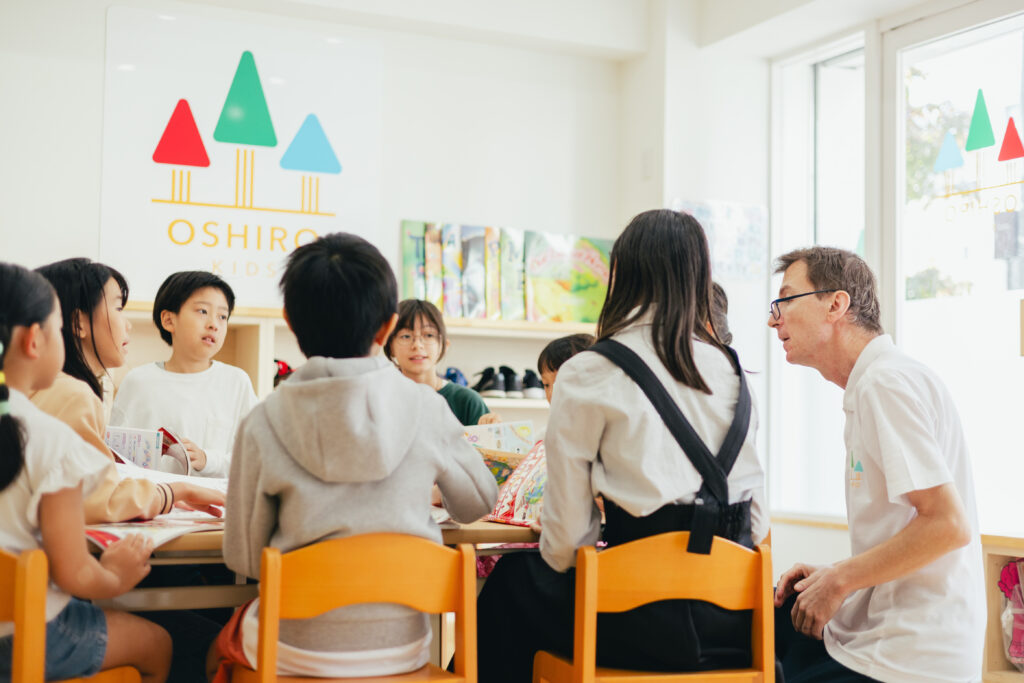
「うちの子、自己中心的で困っています…」
そう感じること、ありますよね。
でも子どもの“自己中”は、
発達の途中にある自然な姿。
大切なのは、感情で反応しないこと。気になるなら曖昧にしないことだと思います。
叱るときは、
その子を叱るのではなく、
「その行動は困るよ」としっかり境界を示す。
褒めるときは、
その子を褒めるのではなく
「よく考えてたね」「勇気を出して言えたね」と、プロセスを見る。
ちなみに、僕はやみくもに注意したり褒めることはしません。
よく子どもは、大人に本気で見てもらえるのか試すような言動を取ることがあるからです。
まさに「自分」という土台を作っている最中なのです。
実は、英語を話せるようになるには
ある意味“自己中さ”が必要です。
「伝えたい」
「これ言いたい」
「聞いてほしい」
このエネルギーがあるから、
言葉は伸びます。
でも同時に、
「相手の反応を見る力」もとても大事です。
英語は、
“自分”と“相手”の間にあるものだからです。
やりたくないなら、やらなくていい。ただし、やりたい子がいるレッスンの邪魔はしてはいけない。
やるなら、教室にいる僕を含めたみんなのことも考えて参加する。
先生と子ども、子どもたち同士。
自分の言動が相手にどんな影響を与えるのか、この想像する力、冷静に周りを見る力もレッスンで大事にしています。
これからも僕は本気で子どもたちに向き合います。
【Facing Children’s Self-Centeredness Head-On】
“Our child is so self-centered, and it’s really troubling us…”
At some point doubtlessly most parents feel this way at some point. We mustn’t forget however that a child’s “self-centeredness” is a natural part of their developmental stage. For parents going through this, what matters most is not reacting emotionally, and - if something in particular bothers us - not leaving it vague or unclear.
When children need correction, it’s best not to scold the child themselves.
Instead, clearly setting the boundary by saying something like, "That behavior is a problem for me / for everyone" is better.
And on the opposite spectrum, when praising children, it’s best not to praise the child as a whole. Instead, focusing on the process is better: "You really thought that through well,” or "Good job for being brave enough to say it out loud.”
Sometimes children test adults with certain words or actions—almost like they’re checking, "Do you really see me? Are you paying real attention to me?” This is because these children are right in the middle of building the very foundation of “who I am.”
Interestingly, in order to become able to speak English fluently, a certain degree of “self-centeredness” is actually necessary.
Students need self-centeredness to fuel the drive to say "I want to express this" and "I want you to hear me.” This inner energy is strong and exactly what helps language grow and improve.
At the same time, however, the ability to “read the other person’s reaction” is equally crucial. After all, English exists in the space between “me” and “you.”
Now, in class if a child doesn’t want to participate, that’s okay—they don’t have to.
But if there are children who do want to learn in the lesson, no one should interfere with or disrupt them.
And if a child does choose to join in, then they should participate while also considering everyone else in the classroom—including the teacher.
Teacher and child, child and other children.
In our lessons, we place great importance on nurturing that imaginative and calm ability to think: "How does what I say or do affect the people around me?”
It’s with this in mind, as we continue to move forward, that I'm dedicated to giving children English communication experiences that are well thought-out and completely sincere.